

Premium Pomegranate Plant – Organic, Hardy Fruit Tree Starter | High-Yield ..More
₹449
₹2,997
85% OffBiggest Sale of the Year!
0H:0M:0S
Final Price inclusive of all taxes
Cash on Delivery
Free Delivery
Get it delivered in 4-7 days
size
FREE SIZE
Product Information
Product Type
Fruit Plant
Brand
Greenery Nursery
Hybrid
Yes
Country
Yes
Product Description
Pomegranate Plant Description
Pomegranate (Punica granatum) is a deciduous fruit-bearing shrub or small tree belonging to the family Lythraceae. It is one of the oldest cultivated fruit plants, valued for its edible arils and ornamental appeal.
Habit & Size
Typically grows as a multi-stemmed shrub or small tree.
Height: 2–5 meters (6–16 ft), though some cultivated trees can reach up to 7 meters (23 ft).
Has a naturally rounded, dense, and bushy canopy.
Stem & Bark
Young stems: angular and sometimes spiny.
Mature bark: reddish-brown to gray, becoming rough and fissured with age.
Leaves
Simple, opposite or sometimes clustered.
Glossy, leathery, and narrow: usually 2–8 cm long.
Color: bright green that may turn yellow before leaf drop in autumn.
Flowers
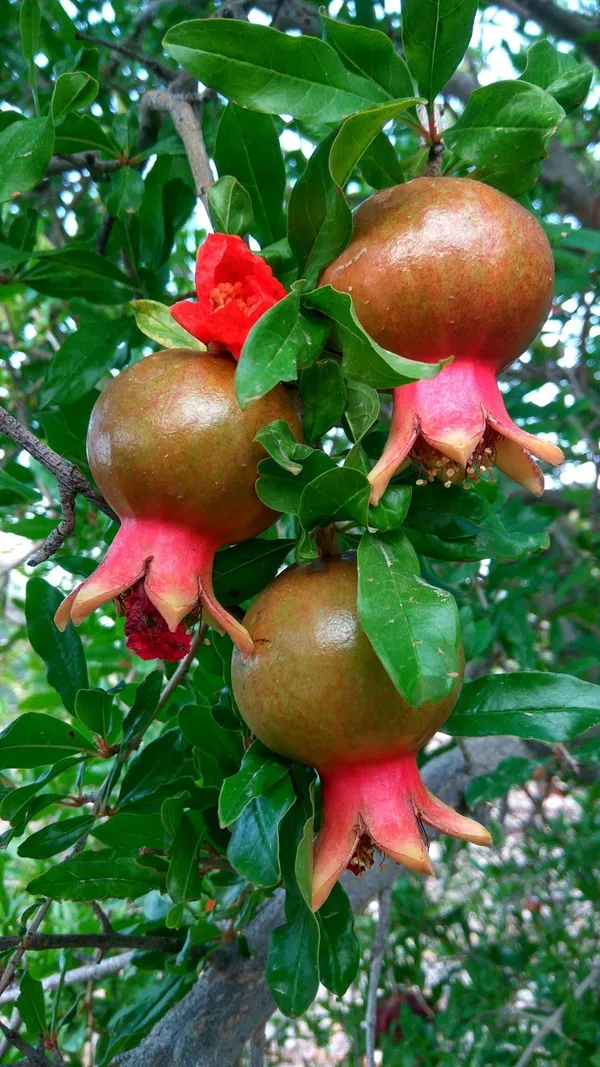
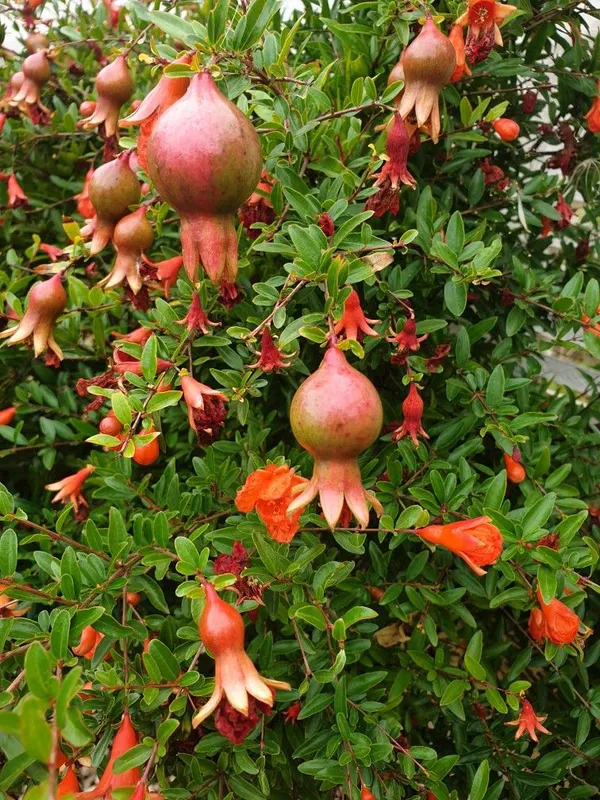
Large, showy, and usually bright red, though cultivars may produce orange, pink, or white blooms.
About 3–5 cm across.
Petals are waxy and crinkled.
Flowering starts in late spring to early summer.
Flowers can be:
Bisexual (fruit-bearing), or
Male/sterile (non–fruit-bearing).
Fruit
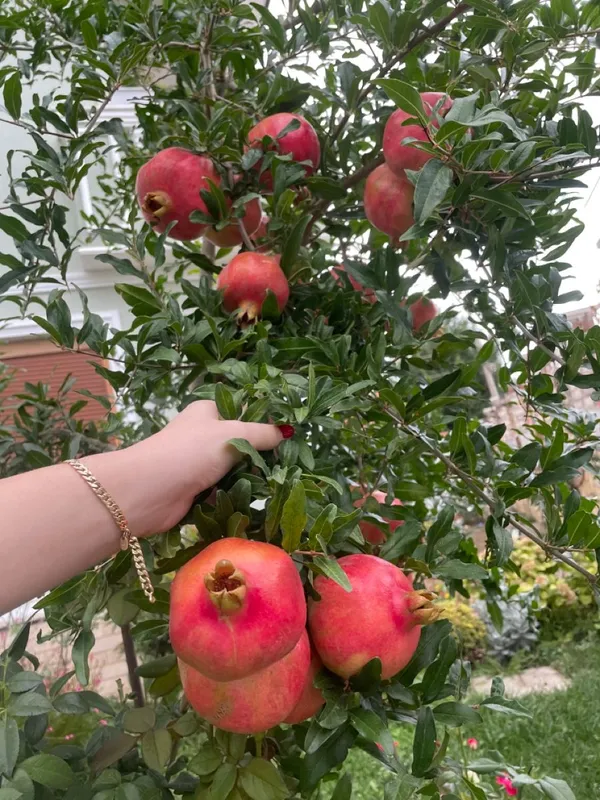
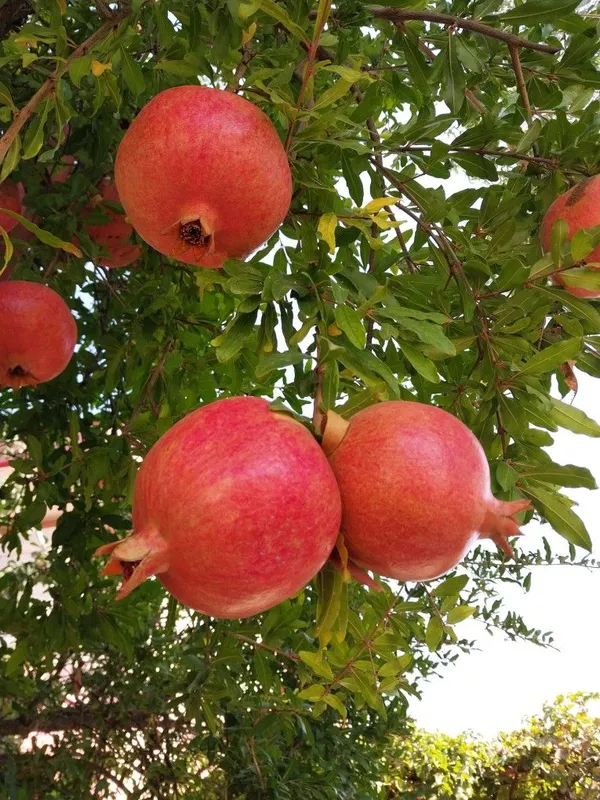
Botanically a berry called a balausta.
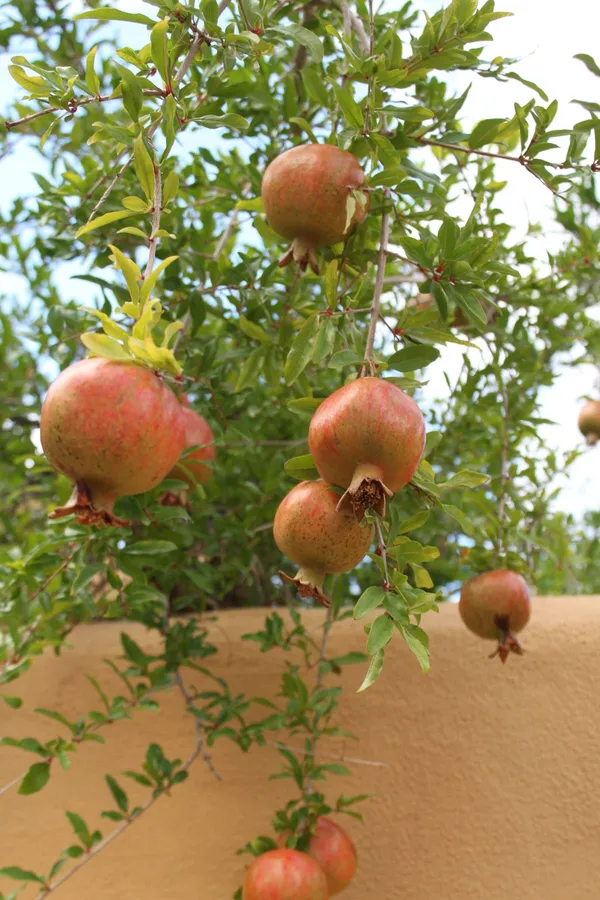
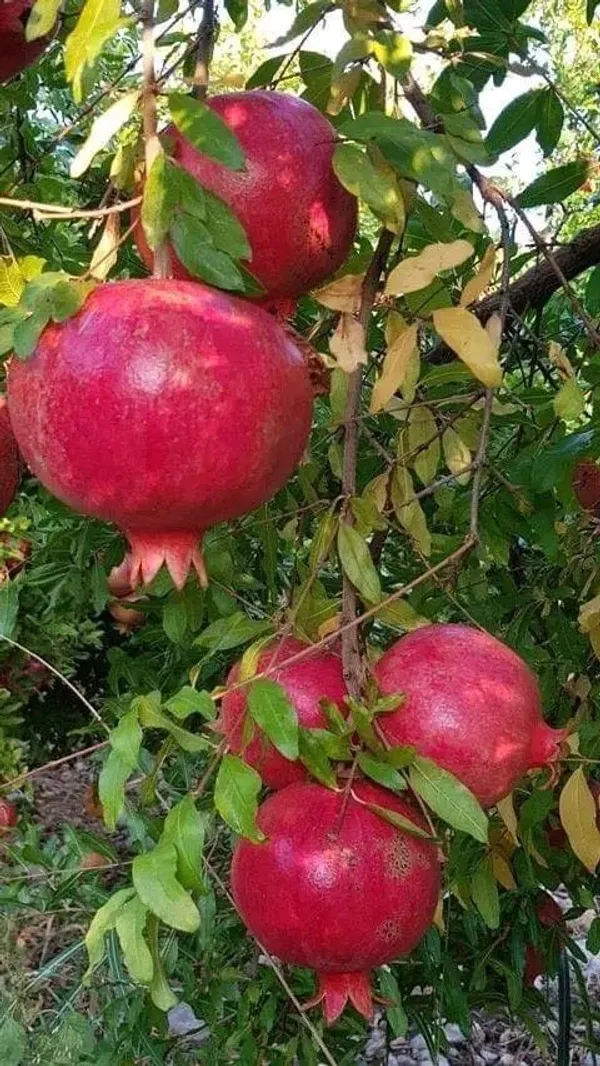
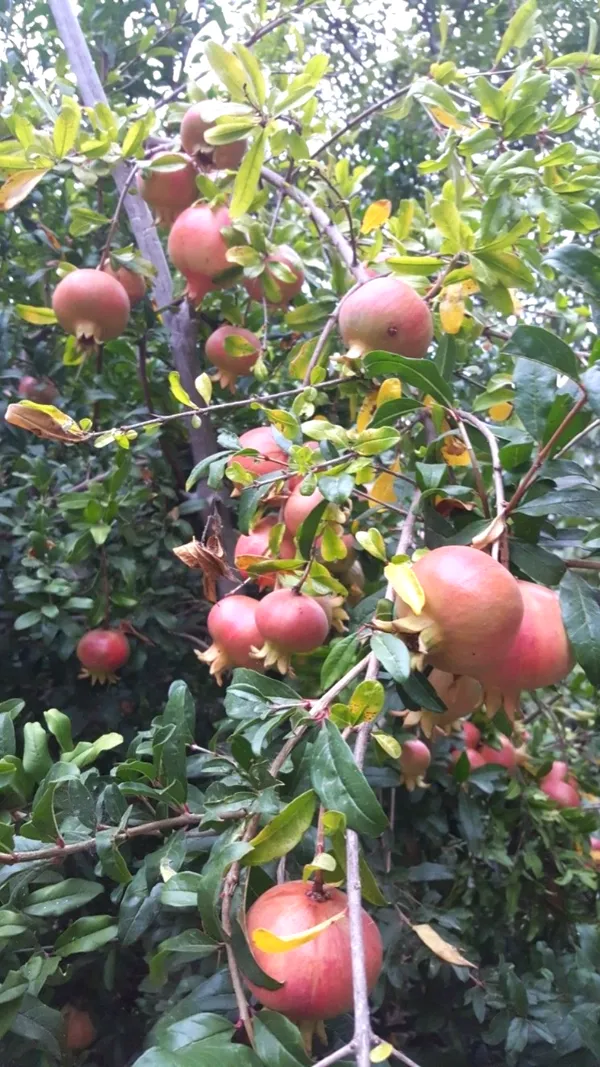
Spherical, 5–12 cm in diameter with a thick, leathery rind that may be red, yellow-red, or deep burgundy.
Inside: divided into chambers (locules) filled with numerous edible arils—juicy sacs surrounding hard seeds.
Arils vary in color from white to deep ruby red, depending on variety.
Root System
Strong, adaptable root system.
Generally shallow but wide-spreading, allowing drought tolerance.
Growing Conditions
Thrives in warm temperate to tropical climates.
Prefers full sun and well-drained soil.
Extremely drought-tolerant once established but benefits from regular water during fruiting.
Uses
Cultivated for fresh fruit, juice, and culinary uses.
Widely grown as an ornamental for its flowers and attractive fruits.
Known for high antioxidant content and traditional medicinal uses.
Pomegranate (Punica granatum) is a deciduous fruit-bearing shrub or small tree belonging to the family Lythraceae. It is one of the oldest cultivated fruit plants, valued for its edible arils and ornamental appeal.
Habit & Size
Typically grows as a multi-stemmed shrub or small tree.
Height: 2–5 meters (6–16 ft), though some cultivated trees can reach up to 7 meters (23 ft).
Has a naturally rounded, dense, and bushy canopy.
Stem & Bark
Young stems: angular and sometimes spiny.
Mature bark: reddish-brown to gray, becoming rough and fissured with age.
Leaves
Simple, opposite or sometimes clustered.
Glossy, leathery, and narrow: usually 2–8 cm long.
Color: bright green that may turn yellow before leaf drop in autumn.
Flowers
Large, showy, and usually bright red, though cultivars may produce orange, pink, or white blooms.
About 3–5 cm across.
Petals are waxy and crinkled.
Flowering starts in late spring to early summer.
Flowers can be:
Bisexual (fruit-bearing), or
Male/sterile (non–fruit-bearing).
Fruit
Botanically a berry called a balausta.
Spherical, 5–12 cm in diameter with a thick, leathery rind that may be red, yellow-red, or deep burgundy.
Inside: divided into chambers (locules) filled with numerous edible arils—juicy sacs surrounding hard seeds.
Arils vary in color from white to deep ruby red, depending on variety.
Root System
Strong, adaptable root system.
Generally shallow but wide-spreading, allowing drought tolerance.
Growing Conditions
Thrives in warm temperate to tropical climates.
Prefers full sun and well-drained soil.
Extremely drought-tolerant once established but benefits from regular water during fruiting.
Uses
Cultivated for fresh fruit, juice, and culinary uses.
Widely grown as an ornamental for its flowers and attractive fruits.
Known for high antioxidant content and traditional medicinal uses.